Dance is everywhere in our culture—in movies, music videos, social media. Yet it’s nowhere in most people’s lives. Not because they’re uninterested, but because we’ve made it inaccessible. We’re building the company that changes this.
The Thesis: A Flywheel for Dance
My thesis is simple: the more people getting into dance, the more money there would be for dance, and overall dancers would be better off. The creative output of dancers would be higher, increasing participation and engagement from the general public. And this flywheel continues.
Our vision is to double the number of people participating in dance by 2035.
There are two ways to look at our mission. First, to bring dance to people—to enrich their lives with meaning and creative expression. Second, to bring people to dance—to strengthen and grow the art form and industry.
This matters now more than ever. In five years, when a large portion of white-collar jobs are automated by AI, what would people do when work by humans is no longer needed? Where would meaning come from? People need a vehicle for self-actualization—the top level of Maslow’s hierarchy of needs. Dance offers exactly that, yet we’ve made it accessible only to the few.
The Problem: Why Dance Remains Exclusive
The Suffering Artist Reality
The suffering artist, the suffering dancer. This is the perpetual image of people who practice dance for their love and passion. And this is an accurate image—dancers occupy the lowest rungs of the income ladder. Why does it have to be this case?
I have been a dancer since 2008, practicing for over seventeen years as a hobby. I have seen it firsthand, experienced it firsthand. The exclusivity of the art. Yes, exclusivity. And exclusivity is not wrong, at least from the perspective of the practicing dancer.
The Exclusivity Trap: A Dancer’s Perspective
For the dancer, the prize is simply too desirable. Winning first place, creating a style of their own, or simply the pleasure of commanding and showing off dazzling techniques and creativity. Dance—or any art form for that matter—absorbs the self. And the side effect of that is the lack of attention to someone else who wants to do the same.
Given an hour of practice time, I would absolutely spend that hour improving my craft rather than educating the person who shows interest. And this is validated by conversations I have with other dancers, especially those at a higher level.
This is understandable. Time is the scarcest resource for practicing dancers. But this rational choice perpetuates the problem—it creates a barrier to entry for newcomers.
The Studio Class Problem: A Beginner’s Perspective
You might disagree and say there are ample dance studios providing all sorts of classes. Absolutely, there can’t be more studios nowadays. But three questions come to mind: What is the quality of education provided for group class students? What is the actual experience of the student at the moment of class-taking, and how much is it supporting their long-term growth? Lastly, are these classes serving people outside of the established dance community—people who aren’t already actively pursuing their dance goals?
Allow me to provide some thoughts. Most drop-in classes neither provide longer-term education for students—as defined in its name—nor provide a fun and entertaining learning experience. The second point is self-explanatory. Someone new or unfamiliar comes to class. They won’t be able to have much interaction with the teacher, as what typically happens in a group class. So they likely struggle, feel awkward and embarrassed. How could we expect them to feel the sense of growth, accomplishment, and confidence that makes dance so enjoyable for those who already possess the skills?
Most people I have talked to who don’t dance have actually tried dancing or learning to dance. And the almost unanimous answer is they decided they were not good with their body, or they think their coordination is bad, or they are simply feeling very awkward learning—or failing to learn—something, while the students in the same class are apparently picking it up at lightning speed. Of course, these students are repeating students with months or years of experience already.
So, in a word, these people are not the kind who have zero interest in dance whatsoever. But they simply suffered from one bad experience, made up their mind that dance is not for them, and have not tried it ever since. This is a tragedy for the art form.
So we have to ask ourselves: How much do we care about these people? How much do we care about bringing in more people to this art form, or bringing this art form to more people? And when was the last time we, the dancer, encouraged or introduced a non-dancer friend to participate in dance?
The Performance Paradigm Problem
Now let’s address another aspect of the status quo which again discourages many would-be dancers from participating in the art form. This is the dichotomy of creation and consumption of dance performances.
In Western culture, there is this persistent image of dance being a performance art. Dance is supposed to be performed by professionals and watched by the general public. Only in other cultures do we find a heavier participative element in dance—Black culture and even modern-day Chinese culture, where people dance in public in various forms without judgment of levels, as an exercise or for fun.
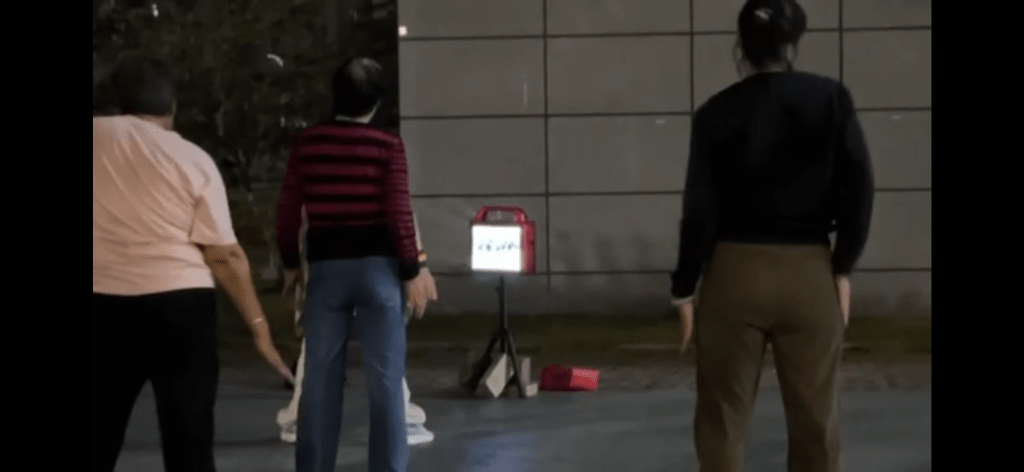
When dance is framed as performance, a whole lot of bad things are attached to it automatically. The first thing is judgment. In order to perform, the performer has to be skilled. Those without skill would be criticized and shamed. This creates an incredible psychological barrier to learning and practicing.
As bad as judgment, the framing itself is a problem. For a lot of people, it automatically puts them into the idea that dance is to be consumed, not something they could pursue and enjoy on their own. In our opinion, framing dance as performance for consumption is a tragic misplacement of the art form. The self-expression opportunity, the embodiment of feeling, the enrichment of the mind—all are lost even before people have a chance to attempt it.
In short, dance as a wonderful vehicle for self-actualization is nowhere to be found.
The Solution: Four Foundational Principles
How are we going to achieve this? Our formula is simple:
Emotional Safety + Fast Joy + Lower Entry Barrier + Identity
Principle 1: Emotional Safety
As we discussed at length in the problem section, the first and foremost thing to do in order to bring dance to people is to reframe it so that people feel safe emotionally when they engage in dancing.
Redefine what “counts” as dancing—any movement that responds to sound. No mirrors, no audience are needed for dance. Sure, techniques and skills can be improved and worked on. But fundamentally, dance is an activity that people do to enjoy themselves. Simple as that. And everybody’s journey is their own. They don’t dance to compete, they don’t dance to impress. They dance for themselves.
Principle 2: Fast Emotional Payoff
Once people understand dance is the simple act of creating with their body and expressing themselves in a simple way without judgment, we want to provide a way for people to experience the joy reliably and quickly. The reason for this principle is concerned with the modern attention economy.
In today’s attention economy, the scarce resource is attention. Everybody is fighting for the attention of consumers. TikTok and Instagram are just a tap away. What makes anyone choose against them to dance or learn dance?
Granted, the person would need some level of motivation to start. We, the education provider, are responsible to provide an engaging and stimulating experience so it can be competitive among all other activities a person can choose to do.
One unique advantage of dance is the deep and resounding joy someone experiences as they dance, or simply the connection they experience through dancing. We are obligated to deliver this joy through our education to the learners as quickly as possible. In short, we need to shorten the reward loop.
Principle 3: Lower Entry Barrier
We primarily discussed the negative aspects of the status quo when it comes to culture and psychology. However, an inherent challenge beginners are facing is the steep learning curve. As we all know, dance is an art form that requires a tremendous amount of skills and techniques. What can we do here?
A straightforward answer would be some form of personalized teaching and learning. Personalized learning hits all the sweet spots for rapid improvement. For example, interactions between teachers and students enable feedback. Pacing that is good for skill internalization and better general engagement. Materials can be prepared so the student practices in the learning zone with challenging but not impossible learning tasks.
Another answer which might strike as interesting is the use of choreography. Choreo focuses less on foundational techniques or qualities the person engaging in dance needs to possess, and it turns the person’s attention to the mirroring of movements and the connection to the music through the copied movements. In a sense, choreography is easier to approach than improvisation. This is validated by both teachers and students—improvisation is often very intimidating for beginners.
Therefore, starting with choreography, with carefully selected pieces, we can engage more beginners and get them to start. And through the process, sprinkle dance foundations for them to work on, and eventually, with the aim to convert them to long-term dancers who would eventually improvise on their own.
Principle 4: Build Identity, Not Goals
The ultimate goal and also the most worthwhile one for us, the educator, is to help people who started learning dance build the dancer identity. This is, in my opinion, the most rewarding thing I get out of dancing. The physical and social aspects are nice, but knowing deep down I can always turn to something I am deeply attached to gives me a sense of security, direction, and self-worth. And this identity is what sustains my practice for all these years.
I won, lost competitions, made strides in techniques or went through bottlenecks. All these things happened, yet I have not quit because I already labeled myself as a dancer. I can’t afford to lose it. Losing it would mean losing myself.
Now, at a tactical level, building identity around dance for a person usually requires the person to improvise, or at least to create in some capacity, even when the dancer is performing a set phrase. There has to be room for the person to inject their moods, feelings, ideas, and personality into what is being danced, so that they truly own the dance, not merely executing someone else’s creation. And this, tied back to the previous section about choreography, requires us to eventually transition the students from choreo dancers to someone who improvises, or “plays” within dance. Logically, this follows by the need to instill in students knowledge of general movements, an awareness of their body, and necessary movement materials and techniques.
Then, one more discussion around identity is the creation of meaning in the ritual for the practitioner. Ritual—the word sounds a bit more spiritual. Consistency is probably more down to earth, or even we could simply consider this as streaks in Duolingo. But unlike streaks in Duolingo, which sometimes feel like a prison for users, we strive to guide students to actually feel things—feel the present moment, energetic, creative, or even dull, when they practice, every time they practice. So the emotional experience is full and genuine from the inside of the practitioner, not an artificial rule that is imposed on the person.
The Technology: How We Make It Possible
I am sure a lot of these problems have been realized and understood by many dance educators. But those problems persist for a reason. And that reason, in my opinion, is rooted in the “how” of dance education.
Why Existing Systems Can’t Solve This
When we think of dance education, we think of different types of classes—group classes, intensives, progressive courses, and private lessons. They are designed for different students with different levels or intensity of needs, which in turn match what the studio, what the educational institution can provide, given the constraints on resources such as personnel and finance.
For example, while in-person private classes are the best for a student’s growth in dance, it is immensely expensive for the student to afford doing privates in a consistent manner at the current price point. And from a system perspective, one-to-one private lessons offer the least scale—for that particular hour, a teacher can only work on one student.
The next best thing students can attend is progressive courses where they follow, let’s say, a two-month, eight-week schedule, and they take classes of progressively increasing difficulties. However, such courses face the problem that for anyone who doesn’t start at the beginning of the course, the person would have to wait until the next cycle begins, or drop in and struggle due to the lack of participation in the prior classes they missed.
Lastly, drop-in classes are always the worst given the lack of structure and longer-term guidance.
If we consider this system of various classes a sort of rudimentary technology used to organize human activities, then such technology has huge room for improvement. And the improvement doesn’t come from a better way to organize dance classes in real life because of the very real constraints that dance educators are facing. It will come from the leaps and bounds in software.
The Technological Breakthrough
As we mentioned in the principle of lowering the entry barrier for beginners, multiple technologies, software technologies especially in AI, are ripe to provide a revolutionary delivery mechanism to make dance learning easy with less friction and at the same time scale without upper limit.
Here we are focusing on two particular cutting-edge technologies that are actively being developed by researchers:
Real-time Voice AI and Large Language Models
This is the biggest kid on the block and what everybody is talking about. But what AI can do in dance education is to revolutionize the user experience for online dance learning.
Online dance learning has the advantage of being very scalable—one recording can be used by an unlimited number of students—but at the same time suffers from problems that dance education in real life doesn’t, which is being completely one-directional from the content creator to the students, and it being a one-size-fits-all solution.
What LLM-powered AI can do is enable an interactive learning experience for the students. So instead of watching a video and trying to mimic, the student has natural conversation with the computer, pushing this one step closer to real-life dance learning with a teacher. With this, educational content would be custom-made to this AI-empowered delivery learning experience to maximize the personalization aspect of it.
Overall, with AI-powered learning experience, the interface would be more engaging. Pacing can be up to the student, which provides a chance for them to internalize materials without feeling pressure to move on, and hence resulting in better learning results and a faster path to level up.
Motion Estimation and Understanding
This technology is lesser known than large language models, but it uses the same underlying AI methodology to estimate and then understand the movement of a dancer from captured video. This technology would enable one more channel of communication between the learner and the machine, and this channel is physical—what the learner is actually doing can be perceived and evaluated by the machine, and hence feedback could be provided back to the learner, guiding them through the learning journey.
And all these can be done at extremely low cost compared to traditional in-real-life learning, hence maximizing the scale for dance education of this format and therefore helping achieve our mission to really bring dance to the people.
The Relationship to Traditional Teaching
To be clear, this format doesn’t replace the conventional teaching and learning formats. Teachers in real life still teach in real life. This online delivery mechanism simply expands the entry part of the funnel by making learning more learner-friendly so that eventually, more people would be interested in pursuing dance as a longer-term hobby. And this in turn achieves the other side of our mission, which is to bring people to dance, enriching the entire community.
Current Project
We are building a private-like learning experience for K-pop, priced at $1 per class.
Why K-pop? Choreography matches our lower entry barrier principle, and it is the most in-demand and popular form of dancing. It’s easy for people to get into.
Current status is internal testing. What we are learning so far is that the user experience is completely through voice in natural language. No touching of the keyboard is needed, so it’s much better.
The Future We’re Building
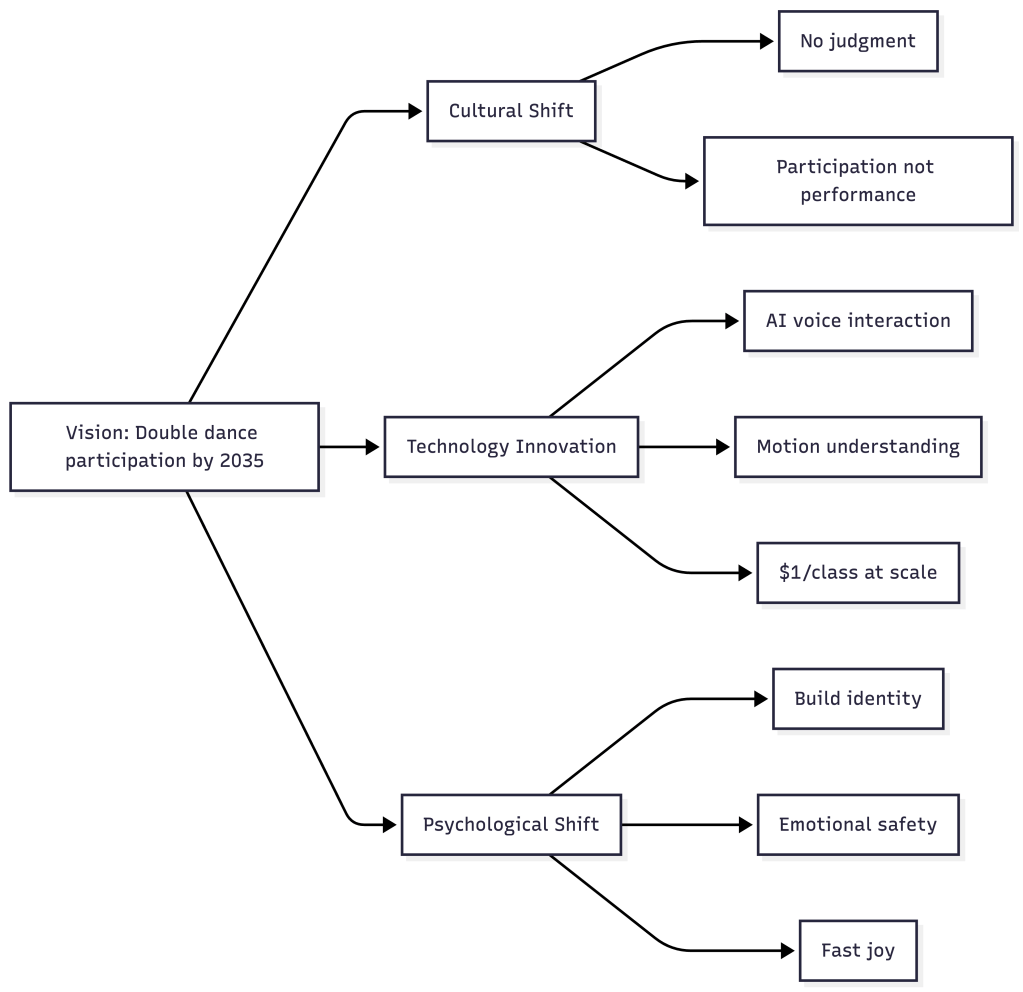
This is the future we’re building: a world where dance is accessible to everyone. Where dancers can make a living doing what they love. Where people have a creative outlet for meaning and self-actualization.
In an age of AI and automation, creative expression becomes more vital, not less. Dance is one of humanity’s oldest art forms. It deserves to be accessible to everyone, not just the few.
If this vision resonates with you, if you see yourself as part of building this future, we want to hear from you. We are currently scouting for a co-founder to join this mission.
 Gang Fang's Blog
Leave a comment